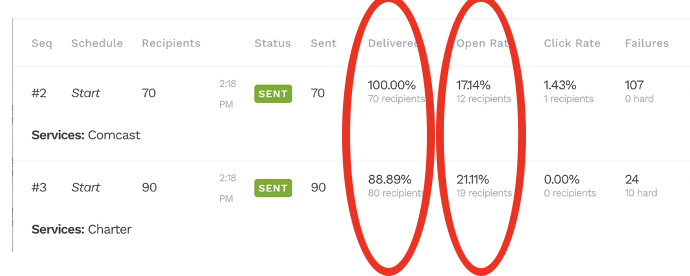
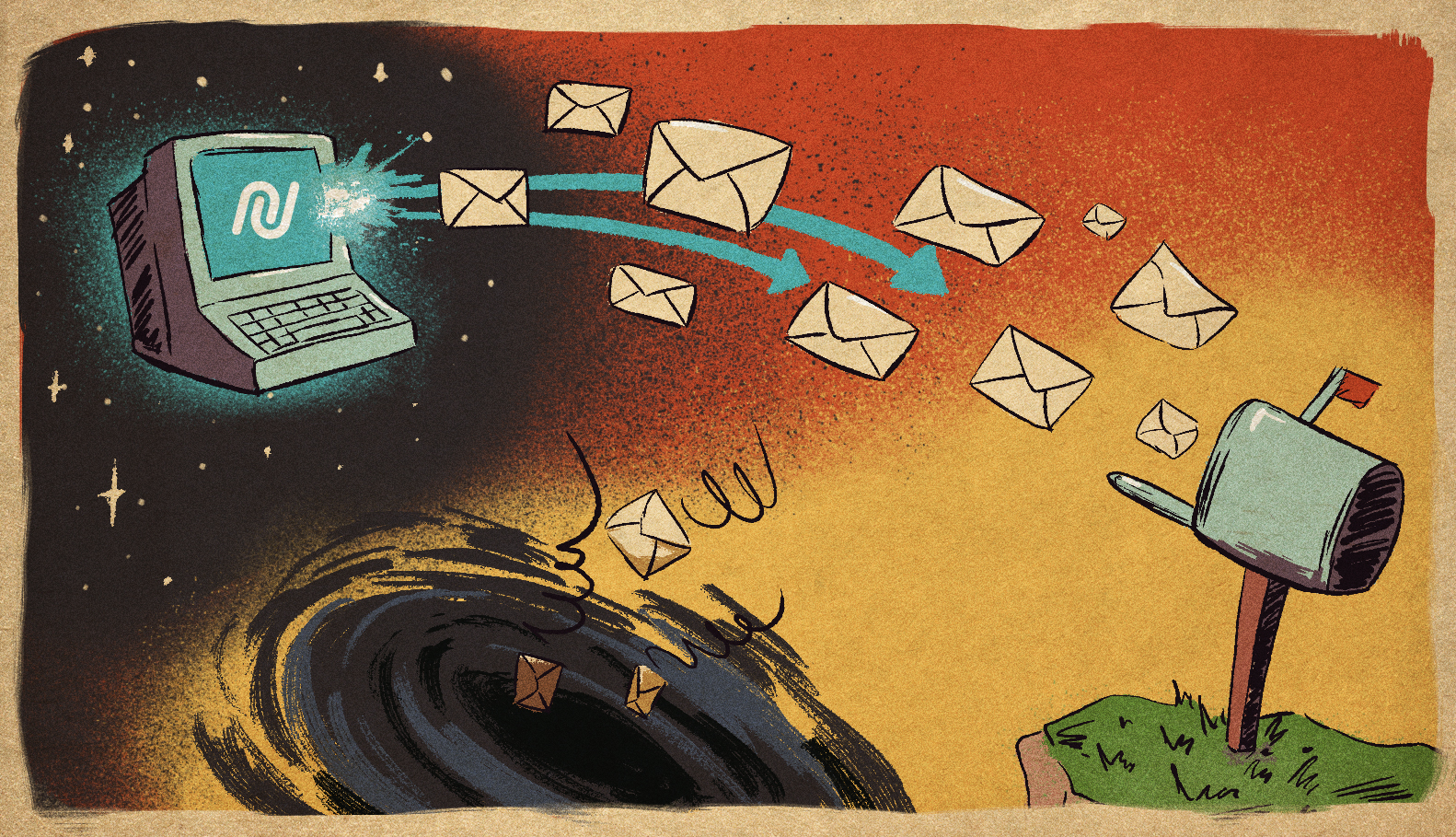
If you’ve encountered the same block multiple times, it’s possible you’ve also encountered the reality that not every block will be mitigated…no matter how nicely we ask the servers & affiliated blocklists to do so.
Trust me
– if it were up to us at Campaign Nucleus to unblock you, you’d be unblocked, like, yesterday. But, unfortunately, we do not have that power so we are at the mercy of the servers when it comes to avoiding and resolving blocks.
The majority of blocklists understand that “accidents” happen & are usually reasonable and hasty when resolving blocks… the first time. With that, they start to become a bit annoyed and less responsive when we continue getting blocked and submitting request after request for resolution.
The truth of the matter is: the servers blocked you for a reason & they will continue to do so until you resolve the issue that is triggering the block.
If you are continually hitting the same block, it’s possible you may need to adjust some of your practices to ultimately fix the issue.
The servers are dominantly looking at 2 things when deciding whether to block a domain and/or IP.
Your audience
Ask yourself:
Did my recipient list opt-in to receive these emails? Disinterested recipients often lead to spikes in server complaints which hurt domain/IP reputation significantly.
How did I gather these emails? Sometimes people of opposing values intentionally submit spam trap emails to opponent newsletters to cause issues with your messages delivering. The same can be true of expired emails as they can be reverted to spam traps – be careful of emails that were gathered many years before.
Am I engaging my audience with my copy so that they are positively responding to my emails? Recipients not engaging with emails can lead to poor reputations, as well.
Your content
Ask yourself:
Am I pushing too hard on controversial topics? While we are free to speak our values, sometime being super aggressive in our content can lead to an increase in user complaints.
Is my picture to content ratio appropriate? Too many pictures without enough text can appear “spammy” to servers.
Do I sound like a salesperson? Using phrases that over-promise or guarantee any level of success sometimes register as “spammy” due to the likely deceitful nature of the message.
At Nucleus, we do our best to avoid the grasp of censorship & will always support your content to the fullest. With that in mind, some things are out of our control and we hope the above information will help you to navigate the difficulties that we must maneuver to find the most success in sending our emails.
For more information, visit your Nucleus Resource Library
Dead addresses cost you in two ways. The obvious one is the bounce itself, which mailbox providers read as a sign you don't know who you're mailing. The less obvious one is that old addresses don't always bounce. Some of them get repurposed to catch senders who aren't paying attention.
There is also a clock you don't control. Validity notes that Yahoo closes inactive accounts after 12 months and Gmail after 24, so the longer a segment sits, the more of it turns into hard bounces (same report).
Three kinds of ghosts
According to Spamhaus, most spamtraps fall into three groups: typos, recycled and pristine (Spamhaus on spamtraps).
Typo traps are misspelled versions of real provider domains, think yaaho.com. Spamhaus ties them to addresses scraped from the web or bought from someone who scraped them.
Recycled traps are real addresses that were abandoned and later turned into traps. Spamhaus says they make up most traps, and they mostly signal that you stopped cleaning your list.
Pristine traps were never anyone's inbox. Spamhaus says mail landing in one points to scraped or improperly sourced data, which says something worse about where the list came from.
The distinction matters because the fix differs. Recycled traps are a hygiene problem. Pristine traps are a sourcing problem.
Haunted by a stranger's list
Rented and bought lists are where the pristine traps live. You can't see how the addresses were collected, you can't see how old they are, and you inherit all of it the moment you hit send.
Spamhaus takes a blunt position on this: it urges people to treat spamtraps as proof of a data collection or hygiene issue and not to go hunting for the offending address (Spamhaus). That is hard advice to take at 4 p.m. the week before an election, but it is the right advice. If a vendor can't tell you how a list was built, the list is the risk.
The blocklist tribunal
Blocklists don't care about your intentions. They care about what your mail looks like from the outside: the IP it came from and the domains it links to.
Two habits make this worse. The first is judging a listing by the IP alone. URL blocklists such as SURBL list the domains that appear inside message bodies (SURBL overview), so your link and tracking domains can put you on trial even when your sending IP is spotless. Check them before launch, not after the first deferral. The second is treating a listing as a mailbox-provider problem. Read your bounce logs first. The provider is usually telling you exactly what it saw.
Exorcism by sunsetting
A sunset policy retires addresses that have stopped engaging. Spamhaus says M3AAWG suggests waiting at least 12 months before dormant addresses can age into traps, and that mailbox providers may start investigating unengaged addresses somewhere between 3 and 12 months (Spamhaus on sunset policies, November 2023, so treat the numbers as guidance, not a rule).
Put plainly: if you mailed someone a year ago and they never opened, clicked or gave, they are not a subscriber. They are a liability with a name attached.
In practice, sunsetting is three moves. Segment by last engagement. Send the re-engagement ask to the middle of the pile, once, with a clear way to say yes. Suppress everyone who doesn't answer. Hard bounces get suppressed the first time, every time.
Political and nonprofit programs resist this because list size feels like strength. I'd take a 150,000-address file that people read over a 600,000-address file that bounces at 7%.
Composite scenario: the 2019 petition list
Composite scenario. No real organization or person is depicted. A statewide PAC inherits 600,000 addresses: a 2019 petition drive plus a rented "likely donors" list. Most of them haven't been mailed in years. A pre-election push is two weeks out, and the finance director wants the whole file.
What went wrong:
Monday: the full file goes out. Hard bounces hit 7%.
Tuesday: Gmail starts deferring mail.
Wednesday: a recycled trap gets hit and the sending IP lands on a blocklist.
Thursday: fundraising links land in spam, even for donors who gave last month.
Friday: the consultant blames Gmail.
How it should have gone: verify the file at import and drop the rented segment. Send first to people who engaged in the last 12 months, then re-permission the rest or let them go. Check bounce and complaint rates after every send. Before launch, check the link domain against URL blocklists.
Don't be this sender
You email addresses you can't date.
You rent lists without asking where the consent came from.
You never suppress hard bounces or long-dormant addresses.
You've never checked your link and tracking domains against URL blocklists.
You blame the mailbox provider before reading your bounce logs.
If two or more of those sound familiar, your list is already haunted. The good news is that exorcisms are cheap compared to a blocklisting the week before Election Day.
Next week: what happens when a cold sender suddenly sends big.