
none
Tips
Compliance
CRM
Data
Guide
Operations
Security
Tips
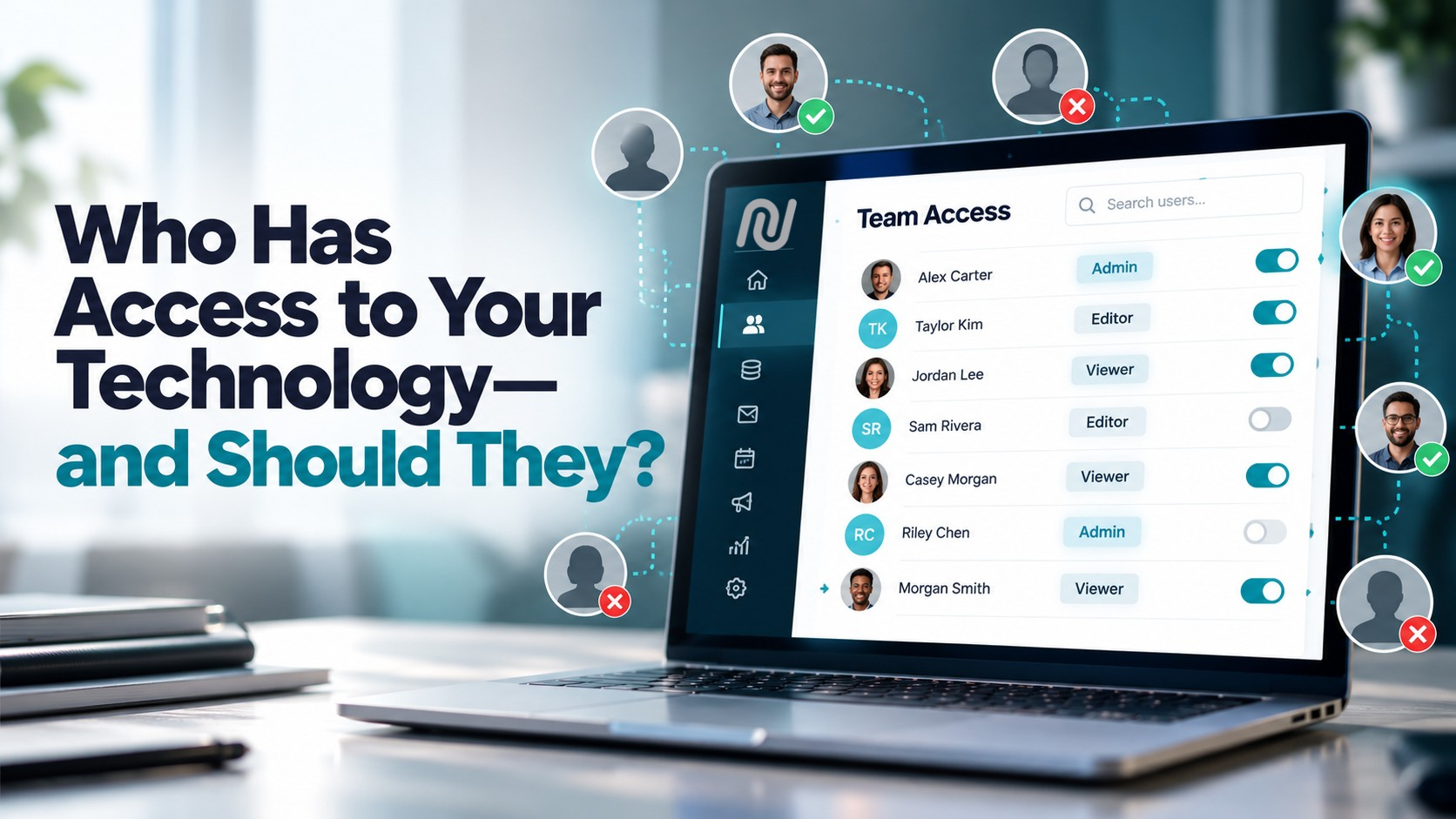
Who Has Access to Your Technology—and Should They?
October 19, 2026
Your organization probably knows who works there.
But do you know exactly who has access to your technology?
That list can be surprisingly different.
Former employees. Contractors. Agencies. Volunteers. Vendors. Consultants. People who changed roles six months ago but still have the permissions they needed in their old job.
Access tends to accumulate quietly. Someone needs access to get something done, so they're added to a platform. Their responsibilities change, the project ends, or they leave—and unless someone actively goes back and reviews those permissions, that access can remain.
That's why one of the simplest questions an organization can ask is also one of the most important:
Who has access to what—and do they still need it?
Access is easy to give. It's harder to keep track of.
Think about how many systems your organization relies on.
Your CRM. Email. Website. Events. Fundraising. Forms. Data. Reporting. File storage. Social accounts. Advertising platforms. Integrations.
Now think about how many people have needed access to those systems over the last year.
Every new employee, campaign staffer, consultant, agency partner, volunteer, or vendor can add another account and another set of permissions to manage.
The problem isn't necessarily giving people access. They need it to do their jobs.
The risk comes when nobody is responsible for reviewing that access later.
Four places access can get messy
1. Employee transitions
When someone leaves an organization, disabling their email account isn't necessarily enough.
They may have separate credentials for your CRM, website, email platform, event system, advertising accounts, data tools, or other technology.
Offboarding should include a clear review of every platform the person could access—not just the systems someone happens to remember.
The same applies when an employee changes roles. Someone who moves from fundraising to communications may no longer need the same permissions they had before.
Good access management isn't only about who works for you. It's about what their current role requires.
2. Too many administrators
Administrator access is convenient.
It's also powerful.
When everyone is an administrator, everyone may be able to change settings, manage users, export information, modify integrations, or perform other high-impact actions.
Most people don't need unrestricted access to do their jobs.
A better approach is simple: give people the access they need to perform their responsibilities—and nothing more.
That limits unnecessary exposure while also making your systems easier to manage.
3. Shared credentials
One username. One password. Five people using it.
It may feel easier, but shared accounts make accountability much harder.
If something changes, who changed it? If the password is shared with a contractor, who remembers to change it when the project ends? If credentials are compromised, how many people and workflows are affected?
Whenever possible, team members should have individual accounts with permissions appropriate to their roles.
That creates clearer ownership and makes access much easier to add, change, and remove.
4. Access that never gets reviewed
Access shouldn't be a "set it and forget it" decision.
Organizations change constantly. People leave. Vendors change. Campaigns end. Projects wrap. Responsibilities shift.
A permission that made perfect sense six months ago might make no sense today.
Regular access reviews give your team a chance to ask:
Does this person still need an account?
Does their current role require this level of access?
Are former employees or contractors still listed?
Are there integrations or third parties that no longer need access?
Who currently has administrator-level permissions?
You don't need to wait for a security problem to ask those questions.
Internal controls matter, too
Managing access isn't only about preventing someone from logging into a system.
It's also about controlling what happens once they're there.
Some actions carry more risk than others. Sending an email to your entire list, changing critical settings, exporting data, publishing content, or modifying important workflows shouldn't necessarily have the same controls as everyday tasks.
That's where permissions and approval processes become important.
A strong digital operation creates appropriate checks around high-impact actions while still allowing teams to work efficiently.
For example, Nucleus Email Approvals can add review and accountability directly into outbound communications. Teams can establish approver groups and determine whether approval requires everyone, a majority, or a single authorized reviewer.
That doesn't slow down communication for the sake of adding another step.
It helps make sure the right people are involved when the stakes are higher.
Make access reviews part of your routine
You don't need an elaborate security program to improve access management.
Start by answering a few basic questions:
- Who currently has access to each critical platform?
- Which users have administrator or elevated permissions?
- Are any former employees, contractors, vendors, or agencies still active?
- Are people using individual accounts rather than shared credentials?
- Do permissions reflect each person's current responsibilities?
- Do you have a consistent process for granting and removing access?
- Are sensitive or high-impact actions protected by appropriate controls?
If some of those answers are difficult to find, that's useful information in itself.
Visibility is the first step toward better control.
The goal isn't more restrictions. It's better access.
Good access management doesn't mean locking everything down until nobody can get their job done.
It's about being intentional.
The right people should be able to access the right tools, data, and capabilities when they need them. And when they no longer need that access, removing it should be just as straightforward as granting it.
That becomes easier when your organization has fewer disconnected systems to manage.
Nucleus brings CRM, communications, events, digital experiences, engagement, data, and other critical organizational functions together in one connected platform. With user permissions, approval workflows, audit logs, and centralized platform controls, teams can create greater visibility into the technology powering their work.
So, who has access to your technology?
If you can't answer that confidently today, now is a good time to find out.
See how Nucleus can help your organization create stronger internal controls and a more connected digital operation.
Deliverability
Emails
Tips
Deliverability & Email Chaos Theory: The Basics
April 15, 2026
Series Edition: Section 1 - The Basics
Why Your Emails Might Be Going to the Spam Folder
A Stat That Should Scare You
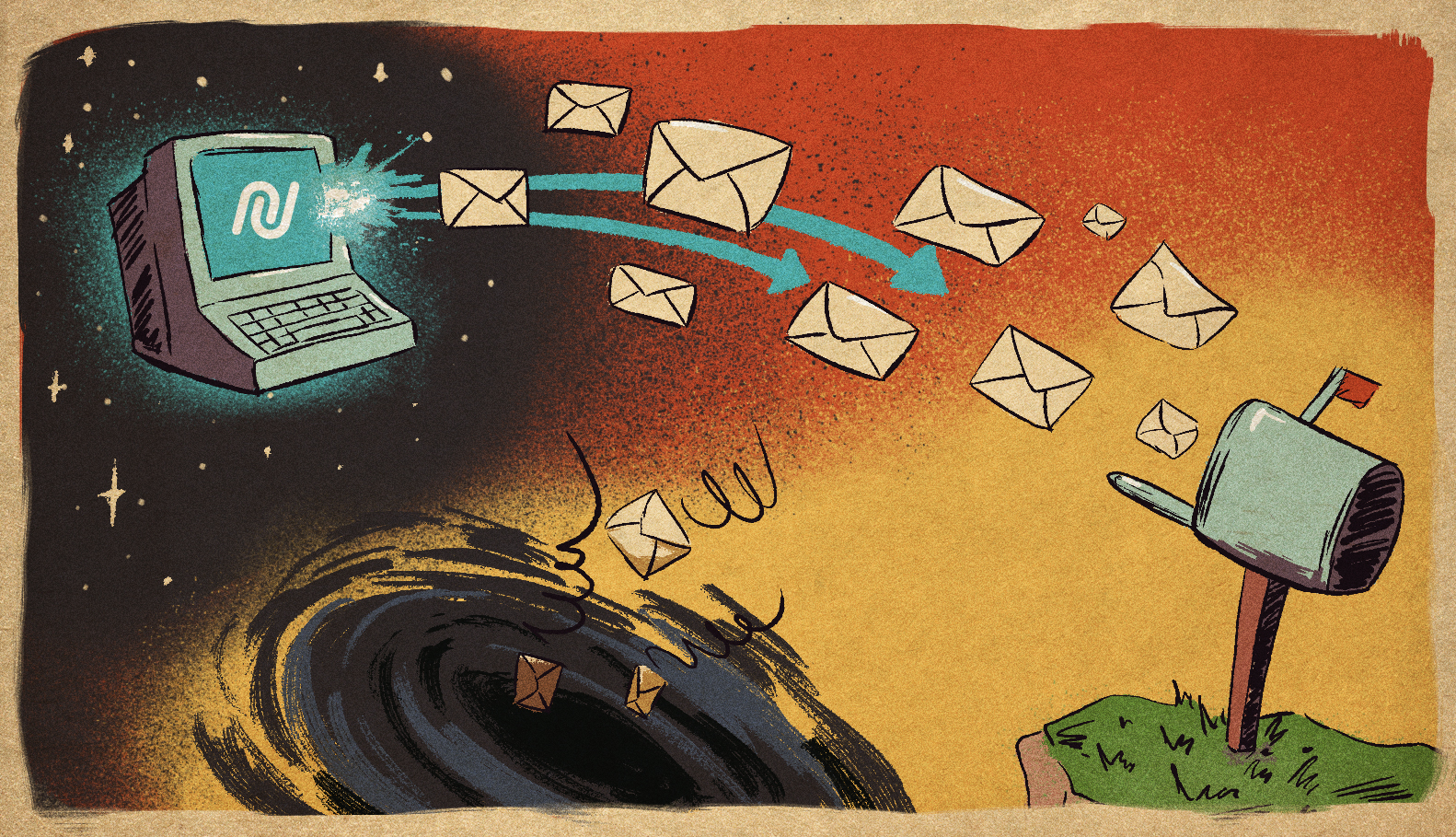
The thing is, 1 in 6 actual emails never makes it to the inbox.
Not spam, not wrong addresses, actual emails from actual companies to actual people who opted in to receive them. Poof, gone!
If you've ever sent 1,000 emails in the past month, you've probably already lost 170 of them to the spam folder or bounced before anyone ever sees them. If you've ever sent 100,000 that's 16,900 emails that no one will ever read.
And the worst part is, you probably don't even know it's happening!
Most people look at their email reports and they say, "Sent: 10,000 | Delivery Rate: 99%." But that 99% "delivered" rate doesn't tell you if they were delivered to the actual inbox or the actual spam folder. That's two totally different results.
So... What Even IS Email Deliverability?
Email deliverability is a simple idea, but messy in practice:
It's the question of whether your emails actually show up in people's inboxes, not spam folders, not promotional folders, not nowhere folders.
That's it. That's the whole idea.
Deliverability is not about getting your email out the door from your server. You can send an email with no problem, but it can end up in a spam folder. Deliverability is the difference between "sent" and "seen."
Here's a way to think about it:
Sending an email is like putting a letter in the mail. Deliverability is like getting it delivered to the doorstep, rather than the junk mail heap.
Deliverability vs. Inbox Placement: What's the Difference?
This is where a lot of confusion happens. These two terms get used interchangeably, but they're not the same thing.
Metric | Email Deliverability | Inbox Placement |
Definition | Whether your email is technically delivered to the mail server without being rejected (bounced). | Whether your email actually lands in the recipient's primary inbox (not spam, promotions, or tabs). |
What It Measures | Technical acceptance by mail servers. Bounces (hard/soft). | Success with spam filters. Whether algorithms let it through. |
Typical Rate | 98-99% (if your list is clean) | ~83% (industry average) |
The Trap | You think you're winning. The email reached a mail server, so it's "delivered." | But it's sitting in spam. Nobody sees it. No engagement. Lost opportunity. |
So, here’s the real talk: a 99% delivery rate means nothing if only 75% of those emails get into the inbox. You’re celebrating your emails making it to the mail server while your revenue opportunities are in the spam folder.
Why Should You Even Care?
Because it impacts your business in three ways:
1. Revenue loss before anything else happens
If 17% of your emails don't make it to your customers' inboxes, that's 17% of your sales, customers, sign-ups, or engagement that just... disappears. Before they even see your email, before they decide to not buy from you, before anything, and nothing happens. That's money on the table that you'll never see.
2. Your sender reputation gets damaged
ISPs (Gmail, Outlook, Yahoo, and so on) monitor your email performance. If people are ignoring your emails, deleting your emails, and marking your emails as spam, an ISP will be thinking: "This email sender is not trustworthy." And the worse your reputation gets, the stricter their spam filters will be on your emails. So, your best emails will end up in spam because an ISP already determined that you're a suspicious email sender.
3. Trust is lost, and it happens quietly with each unseen email
Your customers will unsubscribe from your emails because they never see your emails in their inboxes. Your open rates will be terrible. Your team will wonder if email marketing is even working anymore. Meanwhile, email deliverability is quietly slipping under the radar.
The Chaos Part: Dozens of Systems Are Judging Your Emails
Here's where it gets crazy.
Because when you hit "send" on that email, it doesn't go directly to that person's inbox. Before that happens, it has to go through dozens of invisible checks and filters, all at the same time, all with different rules.
Gmail's got its own algorithm. Yahoo's got its own rules. Outlook's got its own rules – and they're all totally different. And then there are all the authentication systems like SPF, DKIM, and DMARK (don't even get me started on those).
Then there's your reputation score as a sender, and your domain's reputation score, and how many people are actually engaging with your emails, and whether or not you're accidentally sending spam keywords in your content...
And that's still not even all of it.
Each one of these email providers has its own way of doing things, its own way of weighing all these different variables and determining whether to deliver your email.
It's chaos. Beautiful, algorithmic, invisible chaos.
But here's the good news: it's not random chaos.
There are patterns and rules and things that you can control.
And that's what this whole series is about.
The Real Question
Before we delve deeper into who and what is responsible for checking your emails, ask yourself:
Do you know what percentage of your emails actually land in the inbox today?
Not sent. Not delivered. Land in the inbox. Where actual humans can see them.
If you don't know the answer to this question, it's totally fine. You're not alone. Most teams don't track it until something goes wrong. But the space between "sent" and "seen" is where all your problems reside.
In the next section, we'll be introducing you to the unseen actors in your email's journey: the ISPs, spam filters, authentication protocols, and algorithms working together to determine your email's fate.
Spoiler alert: it's going to change everything.
Key Takeaway
Email deliverability is the space between sending an email and it arriving in someone’s inbox. The sad truth is that 1 in 6 legitimate emails never makes it to the inbox, which means revenue and engagement are slipping through your fingers before you ever get a chance to engage with them in the first place. And it’s not because of any one thing, it’s a system of invisible checks and filters all working together to pass judgment on every single email you send. The good news is, it’s all based on a system of rules, and understanding them is the first step to winning at email.
Start sending emails today!
Already a Nucleus user? Visit your Nucleus Resource Library for more!
Texting
Tips
Updates
IOS Is Changing Texting: Here’s What This Means for Your Campaign
August 14, 2025
If your campaign uses texting to reach voters, volunteers, or donors, there are important changes coming that you should be aware of. Apple is starting to support something called RCS messaging, which could be quite significant for political outreach. These changes will shape how messages are delivered and what they look like on voters’ phones—especially for those who aren’t using iPhones.
What is RCS and Why Should You Care?
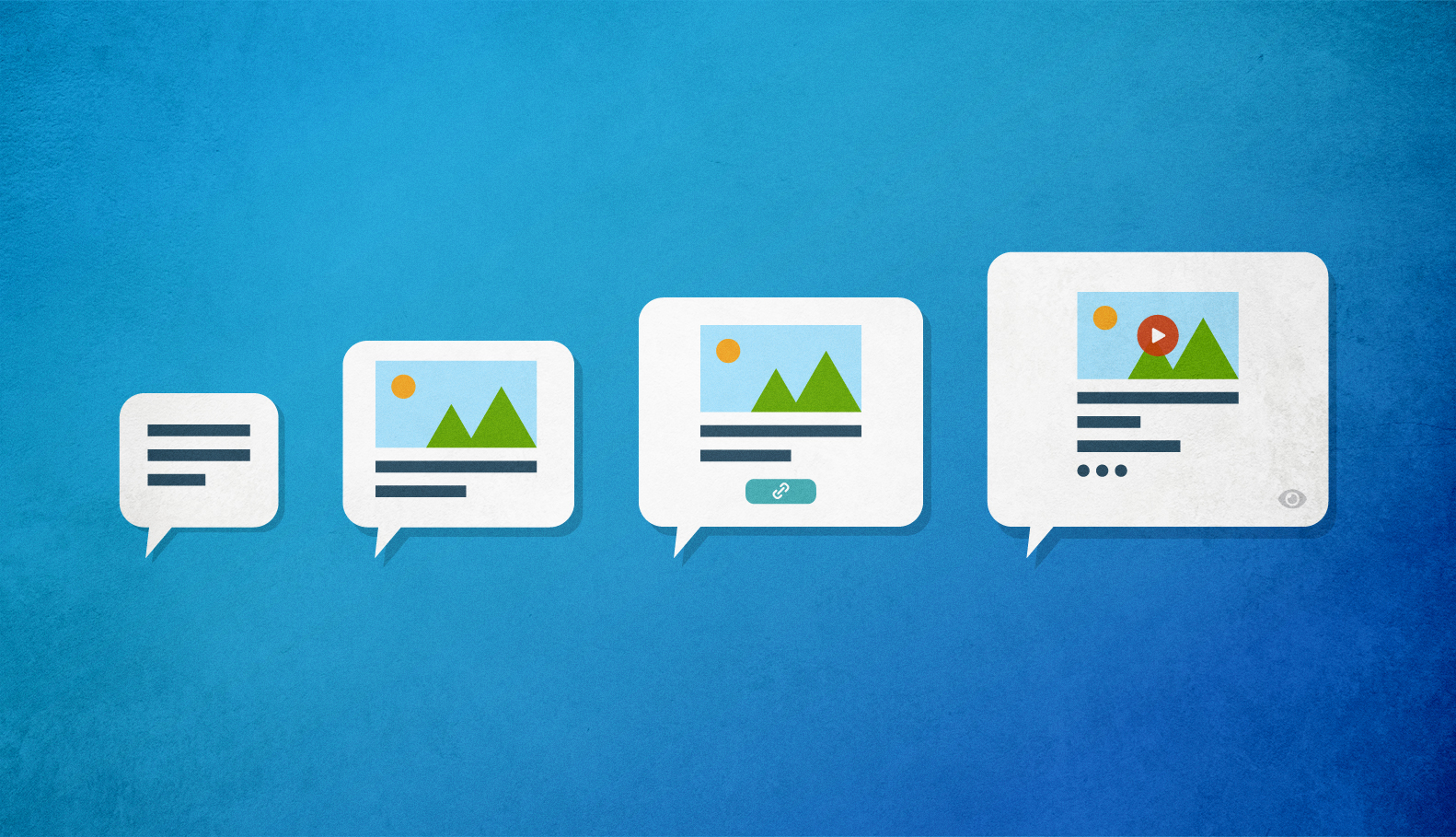
RCS stands for Rich Communication Services—essentially the next generation of SMS. Some new features include higher-quality images and videos, real-time typing indicators, read receipts, and interactive buttons. Until now, these capabilities were primarily available only on Android devices. However, with iOS 18 and planned updates through iOS 26, Apple is now embracing RCS.
For campaigns, this shift opens up new opportunities to engage voters in more dynamic and responsive ways. Higher-quality media, clickable calls-to-action, and real-time communication could significantly improve the impact of your outreach.
But There’s a Catch
Even with Apple supporting RCS, not every voter will be updated to the new system right away. Without the right tools, keeping track of who can receive RCS messages versus standard SMS could quickly become overwhelming.
How Campaign Nucleus Makes a Difference
Campaign Nucleus was built for moments like this. Even as the messaging ecosystem changes, we ensure your engagement stays effective and seamless.
When someone registers for an event, donates, or signs up to volunteer, Nucleus captures their phone number automatically—helping you grow a compliant, opt-in list without manual list management. From there, Nucleus sends automated follow-ups to each recipient’s device, regardless of the message type they can receive.
If they have RCS enabled, they’ll enjoy the updated experience with richer media and interactive features. If not, they’ll still get your message through standard SMS. Our platform also ensures compliance with built-in opt-out tracking, audience segmentation, and limits on message types.
Why This Matters Now
Campaigns that adapt early will benefit most from the shift to RCS. As more voters start using RCS-enabled devices, your outreach can stand out in ways it never could before. Higher-quality visuals, interactive buttons, and real-time engagement lead to better results—but only if your infrastructure is ready.

Help
Productivity
Tips
FAQs: Your Top Questions—Answered
June 25, 2025
Running a campaign or managing an organization is no small feat—but your tools shouldn’t make it harder. Whether you're launching a local city council race, powering a nonprofit initiative, or juggling multiple clients as a political consultant, Campaign Nucleus is here to help you work smarter, not harder.
We get a lot of great questions from folks who are new to Nucleus, so we’ve pulled together some of the most common ones to give you a quick, helpful overview of what to expect (and why people love it).
Does Campaign Nucleus integrate with other platforms?
Absolutely. Nucleus is built to eliminate data silos and make your work more efficient. We support integrations with a wide range of third-party tools including:
-
Payment processing
-
Data enrichment
-
Peer-to-peer texting
-
SMS deliverability
-
Voter files and more
If there's a platform you're already using, chances are we integrate with it—or we can explore a custom solution to make it work for you.
How much does Campaign Nucleus cost?
It depends on your organization’s size and needs. We offer flexible pricing plans tailored to campaigns, nonprofits, agencies, and advocacy groups. The best way to get accurate pricing is to schedule a quick demo with our team, where we’ll learn more about your goals and recommend the right plan for you.
How long does it take to get set up?
You can get started quickly. Many teams are fully operational within a few days. Setup time depends on the complexity of your workflows and data migration, but we make it simple by pairing you with a dedicated onboarding specialist who will walk you through every step of the process.
Can I manage multiple teams or campaigns within Nucleus?
Yes—Nucleus is built for scale. Our Agency feature is ideal for consultants, firms, or any organization managing multiple campaigns or entities. With this tool, you can:
-
Oversee multiple accounts from one dashboard
-
Switch between clients seamlessly
-
Control branding, user permissions, and reporting
All while maintaining visibility and organization at every level.
Ready to See Nucleus in Action?
Campaign Nucleus is more than just campaign software—it’s your partner in strategy, outreach, and growth. Whether you’re building your first campaign or managing a statewide operation, we’re here to help you launch with confidence and scale with ease.
Have more questions? Schedule a demo today to get personalized answers and see how Nucleus can work for you!

Emails
Tips
Every Email Deserves a lil’ TLC
December 5, 2024
By Julia, Deliverability Expert
“I don't want no scrub, a scrub is an email that can't get no love from me.”
Here at Campaign Nucleus, we want to make it as easy as possible for our users to produce the most successful email content possible. With that our team has done some research and put together some information we’ve found helpful in creating our own emails.
Let’s start simple – what are the things that every recipient is going to notice about your email?
- Your sender
- Your subject line
- Your content
Now let’s talk about how we can utilize all 3 of these factors to create the MOST TOP NOTCH EMAIL possible!!
Sender:
When you see an email in your inbox, what is the first thing you see? Likely, the sender’s name. Are you more likely to open an email that appears to be sent from a specific person or one that declares a corporation. Likely, a specific name.
Well, your audience feels the same. This means you can improve your user engagement simply by using a more personalized sender, such as a team member, to make your communications seem more “human”and less “AI generated.”
For example, an email being sent from Julia from Nucleus may perform a bit better than one being sent from the Biden Administration (although that may have more than one reason for performing poorly…).\
With that, consistency is also always key – it’s a good habit to keep one sender and domain affiliated with each type of content being sent.
Subject Line:
Following the sender, you likely immediately notice the subject line affiliated with the email.
When it comes to subject line, there are a couple things to keep in mind:
- Topic – always make sure your subject line sticks to the point. No one wants to open an email that has nothing to do with the subject line… it appears deceiving
- Length – your subject line length can actually drive your engagement. Short subject lines (below 50 characters) & longer subject lines (above 70 characters) actually have been found to receive more engagement than average-length subject lines.
Content:
The last thing the recipient will see but generally the most important portion of the email for them to see.
There are lots of considerations to be made when designing our content & every audience type responds differently to different copy types.
We encourage individuality in your sends but here are a few things to keep in mind:
- Be concise – the average human has a reading attention span that ranges from 10-15 seconds… that isn’t very long.
- Consider your call to action – it’s good practice to include multiple links within the email & our system makes it easy to determine where your audience is engaging the most within your email.
- Always check variables – we want to make sure we do not address our recipients as “Hello %recipient.first%.”
- Make your email readable – this includes but is not limited to:
- Having a nice layout – easy to read & pictures should never outweigh text
- Using color and branding wisely
- Ensuring pictures are high enough quality that they engage your audience (although too much data can slow your email load time & that isn’t great either)
For more information be sure to contact our team for training or insight and visit your Nucleus Resource Library!
OR
Want to get on the platform that sent 6 BILLION emails in the last 90 days leading up to Election Day? Click here!
Emails
Tips
Consistency is Key: Spontaneity has no place in email marketing!
May 16, 2024
By Julia, Deliverability Expert
At Nucleus, we understand that it can be hard to put a schedule on hard-hitting
news. But, did you know that utilizing consistency in your email practices can actually help to improve your sender reputation?
The WHY:
By remaining uniform in certain areas of your email sending, you allow yourself to become more recognizable to both the recipients & the server. This makes it much more likely for recipients to remain engaged in your email content.
The HOW:
Some ways we can apply this method are as follows:
- Creating (when possible) a schedule of sending
- For example: sending a newsletter every Thursday at 12pm
- Consistent senders for any and all sends
- For example: always sending newsletters from Julia from the Email Team <[email protected]>
- Use of branding
- For example: keeping your design, layout, & logo consistent in all newsletters
We recognize the need for testing when it comes to deciding the most effective routes to be taken. We encourage utilizing the Nucleus features to determine to most sends times/days, senders, & branding or layouts that your recipients respond to most positively.
Within the Nucleus platform, you can see the engagement statistics yielded by all senders in addition to being able to see the engagement statistics on an individual campaign. Be sure to use this data to have the most success in your email sends.
Below you can see an example of a sender we may want to avoid using vs one that is receiving very good engagement:

Below you can see an example of a campaign that received less engagement vs one that received more:
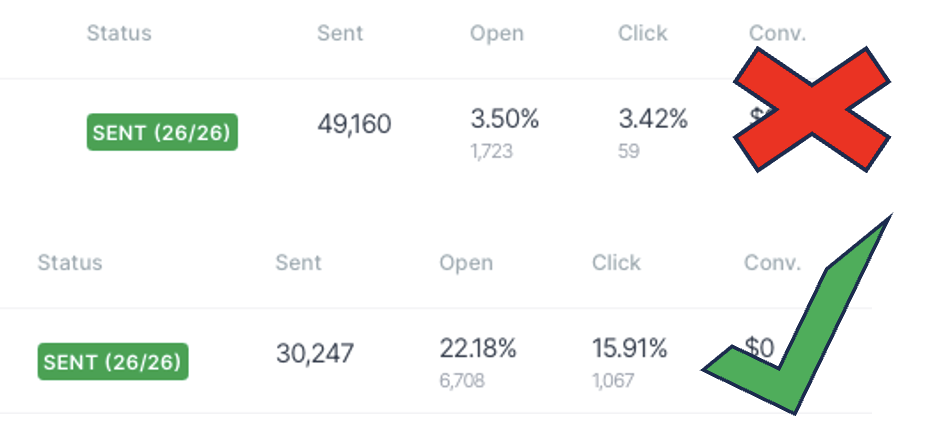
*This can be indicative of the effectiveness of your send time or brand (in addition to overall content)
For more information regarding how consistency can benefit your campaigns & how to measure success, be sure to contact our team for a training or insight.
Interested in Nucleus in action? Get a demo